This week, we examine the India-U.S. partnership and what it could mean for emerging markets and Indonesian markets on a dangerous path.
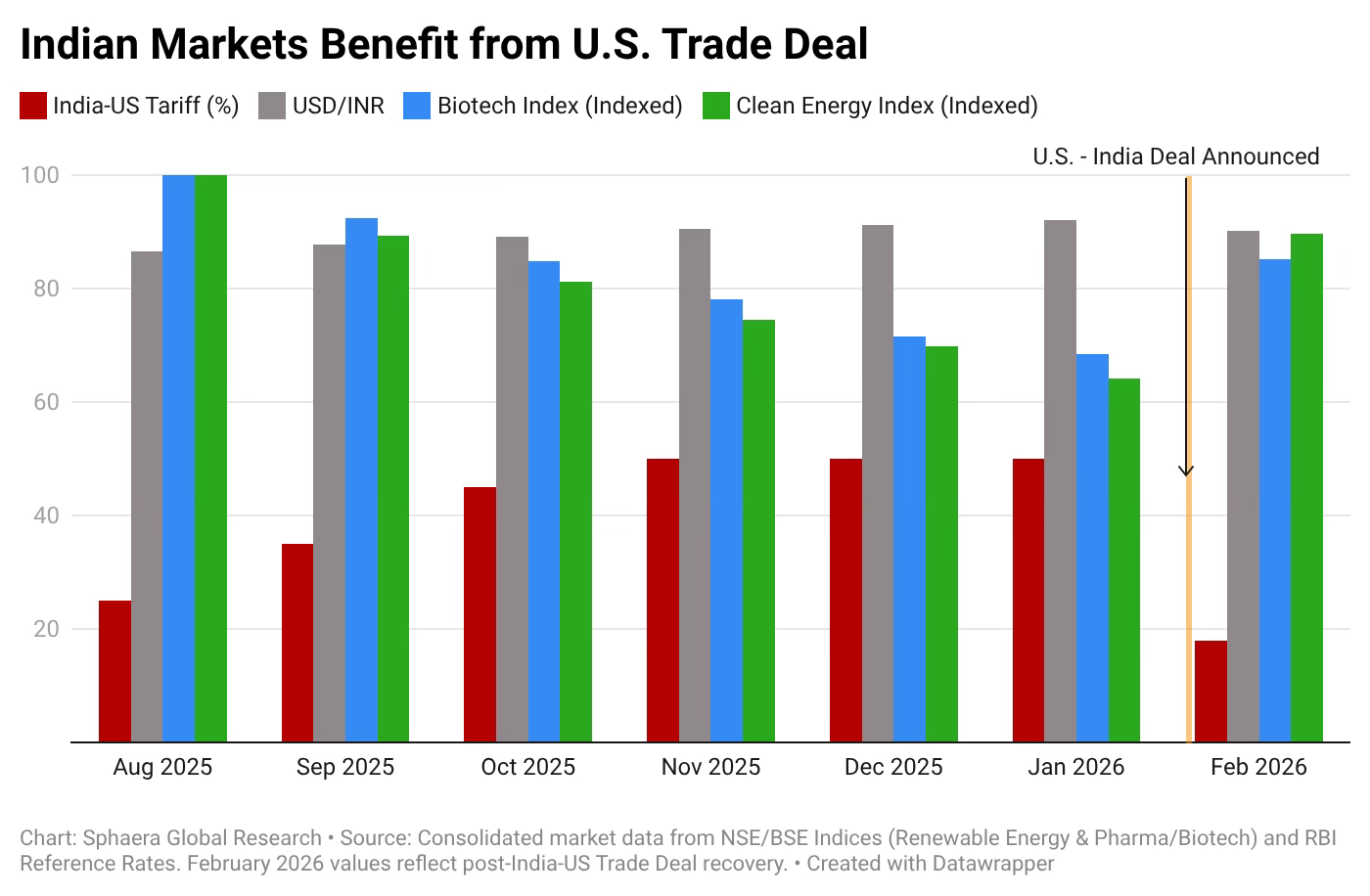
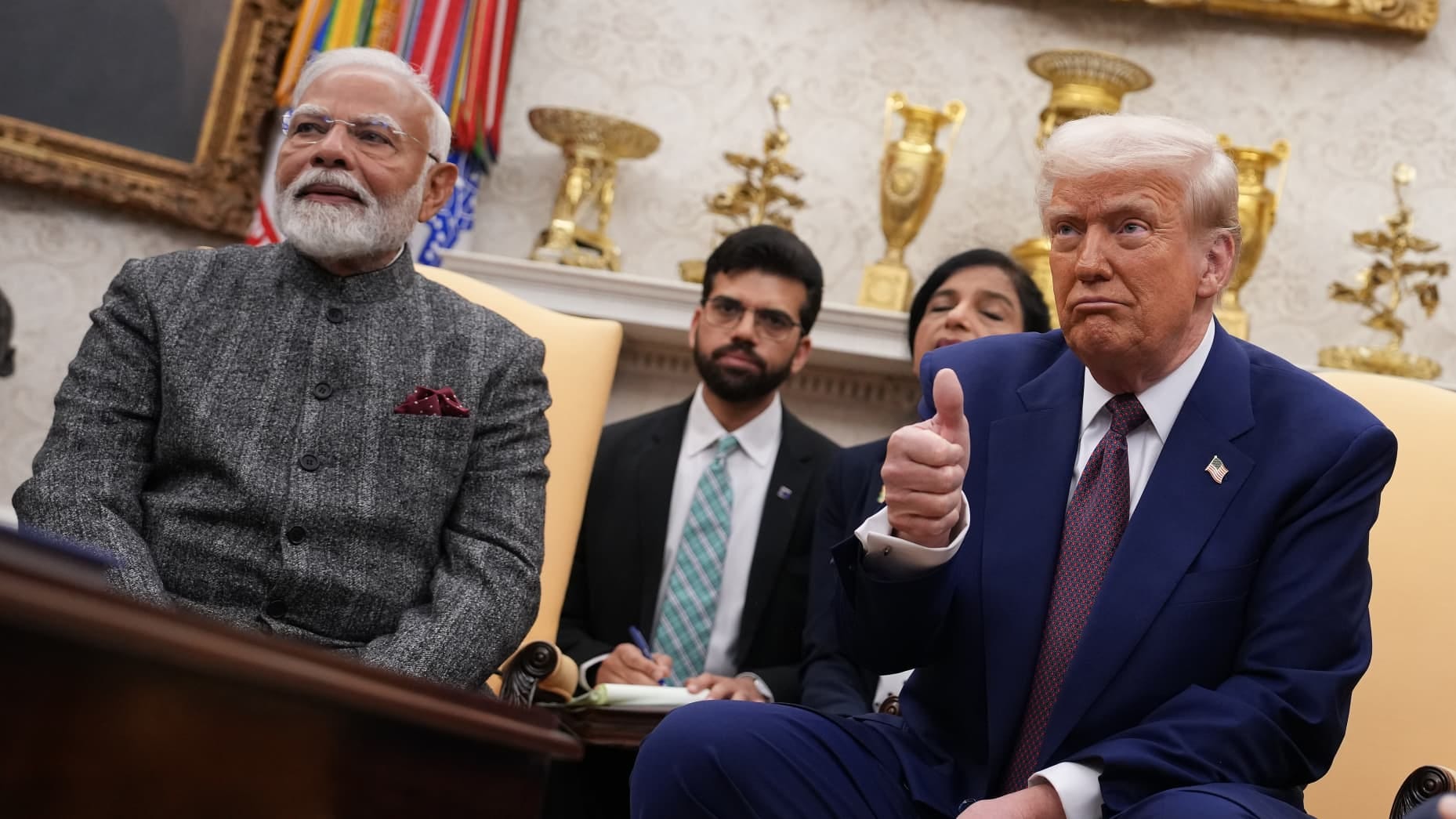
New Delhi, India: President Trump and PM Modi announced they had reached a trade deal to lower tariffs on Indian exports from 50%-18%, a result of India cutting off oil buying from Russia. Indian markets rallied However, nothing has been set in stone, and many analysts said a lot of uncertainty was left on the table.
What’s been said:
Trump announced that Modi agreed to invest over $500 Billion in US energy, tech, agriculture, and coal.
Modi did not confirm these details in his post but only said that a deal was reached over the phone with President Trump.
Indian opposition leaders have come out vehemently against the deal saying that Indian farmers and workers would be gravely harmed if it is put in place.
What it means:
If this deal is realized in the form that it has been suggested, India would have to sever their long-standing relationship with Russia, a major loss of trade and energy production. But this is a big IF. Despite, the uncertainty, data shows that India was the largest importer of Russian oil in January 2026
On February 5th at 10pm India announced an over $80 billion investment to buy Boeing jets, the first hard commitment from India to be signed in several days.
The Forecast:
With the blowback that Modi has gotten at home already after the deal was announced, it seems unlikely that some parts of the deal like unlimited agricultural import access to the US and cutting off Russian oil, there are some aspects of this deal that look like they will stand the test of time like Indian investment in U.S. heavy industries and lowering of tariffs between the two nations.
This deal goes into effect, we also see massive inflows of USD and outflows of Indian Rupees, driving up the value of the Indian currency and reversing its year-long depreciation since the U.S. announced tariffs.
If the deal does go into effect, we see several major industries in India benefitting from it - specifically biotech and clean energy companies(deep dive coming on Indian green-tech pure plays). The U.S. produces about 30-40% of India’s Pharma business - lowering of tariffs will reduce Indian company costs and give them a pricing edge over Chinese firms that pay higher tariffs.
Jakarta, Indonesia: Indonesian Markets in Danger Again This Week
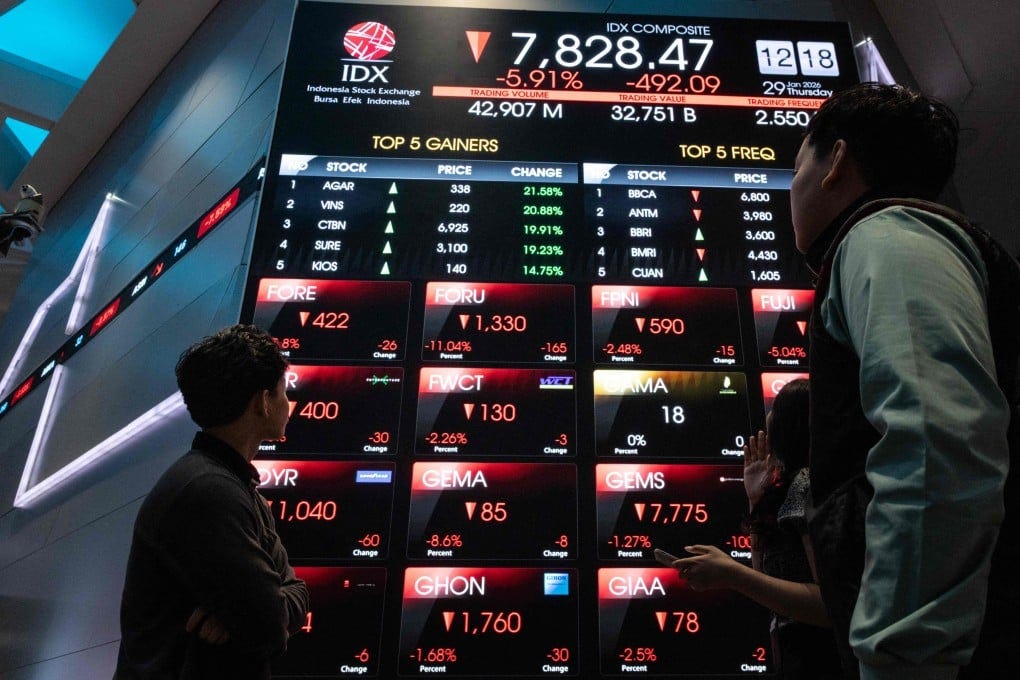
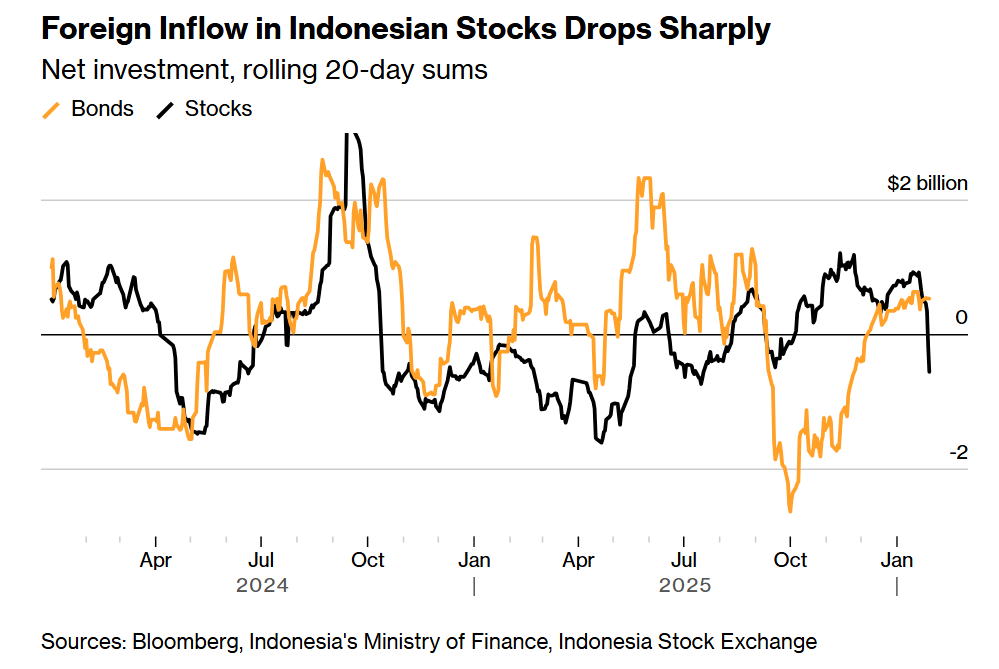
Context: Last week, Indonesia’s stock index fell over 6% as MSCI downgraded the country’s equities leading the CEO of the exchange to resign. Markets rebounded slightly after the country’s SWF “Danantara” announced they would continue to buy Indonesian stocks to stimulate growth.
This week: Things went from bad to worse when Moodys downgraded Indonesia’s credit outlook and lowered outlook for several Indonesian firms.
As of Friday February 6, the Index is down 5% this week, with about $120 billion being wiped out from its equity markets since the start of 2026.
The downgrade came due to lack of transparency in financial markets, questions over central bank independence, and ambitious growth policies by the Indonesian President (which have stimulated their economy over the past several years), and how he will be able to finance it.
What it means:
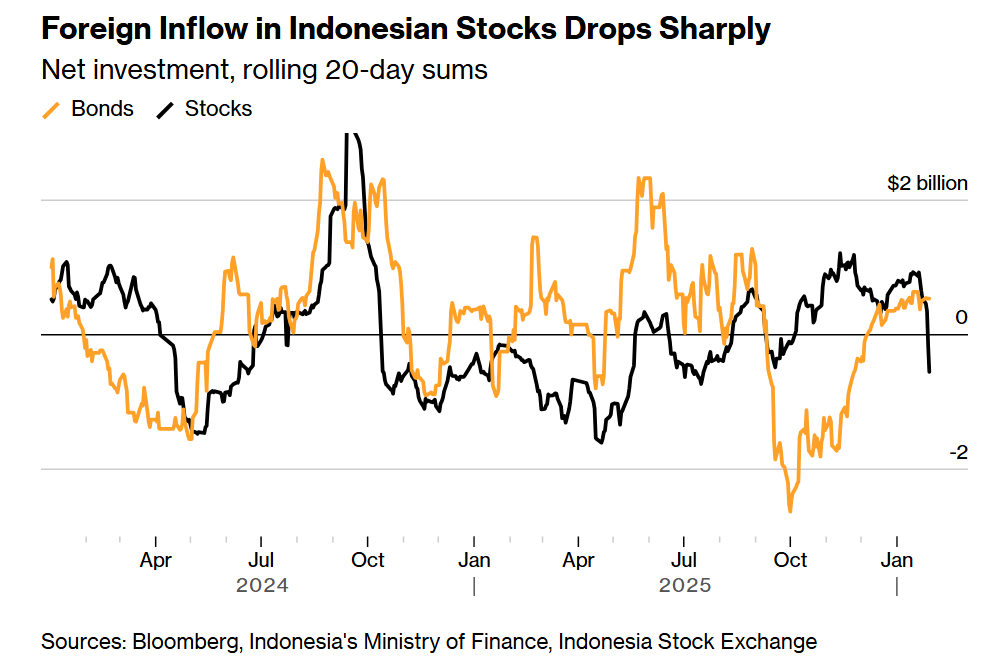
The downgrade is a massive development for the country which relies heavily in foreign investment and is one of the fastest growing emerging market economies, not to mention at G-20 nation. The outlook cuts for major Indonesian players like Telekom Indonesia are also a major development to watch and mean foreign investors could look to divert their capital elsewhere.
As an emerging market success story, these downgrades are a significant bump in the road for the country which has posted staggering growth and has ambitious sights in leading the energy transition as well as becoming a global manufacturing hub. This is why we are still buying.
We predict that these downgrades and negative outlooks will enforce more discipline within Indonesia’s financial markets and be a positive for the country in the future. We have already seen this both in the Index CEO’s resignation and Danantara doubling down on equity investments to capitalize the markets. Indonesia has become a diverse and interconnected global market in Asia, forging partnerships on both sides of U.S.-China sphere of influence - carving out an important role in the digital economy and natural resources, amongst other important industries. Indonesia will bounce back from this rough week, and we see this as a good buying opportunity for their index and major players like Telekom Indonesia and Petramina.